|
|
|
|
|
|
|
|
 |
|
The spinal cord stimulation market has exploded in recent years. Spinal cord burst stimulation applies high-frequency, intermittent electrical stimulation to the spinal cord, aiming to provide analgesia. Despite some reports of effectiveness after lumbar spine surgery and increasing use among practitioners, the evidence supporting its effectiveness is quite limited.
This placebo-controlled, crossover RCT conducted out of Norway was published in JAMA and included 50 patients with chronic radicular pain who underwent a decompressive or fusion procedure for lumbar spine disease. Patients were randomized to receive two 3-month blocks of burst stimulation treatment and two 3-month blocks of placebo treatment in a randomized order. The primary outcome of interest was the change in disability score between the active treatment periods and placebo treatment periods.
-
No significant differences in disability scores (Oswestry Disability Index) were observed between spinal cord burst stimulation and placebo stimulation (p=0.32).
-
Similarly, no significant differences in back or leg pain were observed between spinal cord burst stimulation and placebo stimulation (p=0.07; p=0.32, respectively).
-
Quality of life scores and physical activity measures (steps per day; time spent standing or walking) were similar between the two treatments.
Bottom line. This crossover trial found no clinical benefit of spinal cord burst stimulation, calling into question the efficacy of the treatment. It also highlights the powerful placebo effect of neuromodulation therapies, with the placebo effect reaching reported levels of clinical significance!
Check out our full ACE Report on this paper. |
 |
|
|
|
|
 |
|
100,000s of hip fracture surgeries are performed every year. Spinal or general anesthesia is almost always used, but evidence comparing the two techniques is limited, particularly with respect to patient satisfaction over extended follow-up. This secondary analyses of an RCT aimed to compare pain, analgesic consumption, and patient satisfaction outcomes between the two anesthesia techniques.
The REGAIN trial included 1600 patients undergoing hip surgery, randomizing them to receive either spinal anesthesia (n=795) or general anesthesia (n=805). Outcomes of interest included pain (during hospitalization and up to 365 days post-operation), analgesic consumption, satisfaction with anesthesia, and anesthesia-related adverse events.
-
The severity of pain during post-operative day one was significantly lower in the general anesthesia group on post-operative day one. Pain was not significantly different at 60-, 180-, or 365-days post-operation.
-
Consumption of prescription analgesics was significantly lower in the general anesthesia at 60 days post-operation.
-
The incidence of shivering was significantly higher in the spinal anesthesia group. Conversely, the incidence of sore throat was significantly higher in the general anesthesia group.
-
Satisfaction with anesthesia was similar in both groups.
Bottom line. Spinal anesthesia led to significantly greater pain in the early post-operative period and a greater consumption of prescription analgesics in the first 60 days compared to general anesthesia for patients undergoing hip fracture surgery.
Check out the comprehensive analysis of this paper in our ACE Report. |
|
|
|
|
|
 |
|
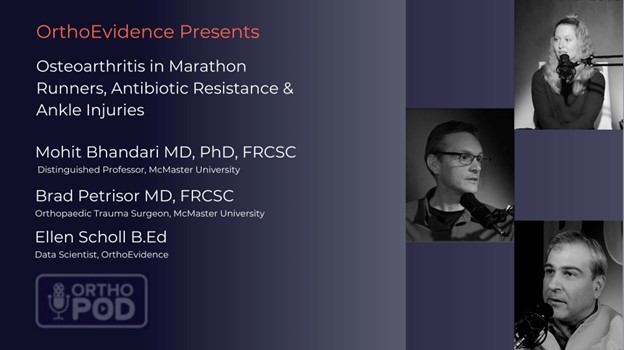
In this OE Headlines podcast, Dr’s Brad Petrisor and Mohit Bhandari discuss a variety of hot topics in orthopaedics, including the effect of marathon running and training on osteoarthritis and injuries. They also discuss:
-
A WHO report on antibiotic resistance.
-
Ankle sprains in elite athletes, suchc as Kevin Durant & Bianca Andreescu.
-
A randomized controlled trial comparing cast-immobilization vs. removable bracing for ankle fractures.
Watch the full OE Headlines podcast here. |
|
EDITOR’S PICKS |
|
|
|
Mini-Master's Series: Network Meta-Analysis – Meta-analysis has become a widespread tool used to compare outcomes between two treatments across multiple studies. But what if we want to compare more than two interventions across multiple studies? Enter: network meta-analysis (NMA). In this OE Original, we will outline 3 important things you need to know about NMA. (Read) |
|
|
|
Cognitive Functional Therapy for Chronic Low Back Pain – With global back pain being one of the leading causes of disability, effective treatments are high-priority. The RESTORE Trial, published in the Lancet, aimed to assess the effectiveness of a cognitive functional therapy (with or without biofeedback sensors) for patients with chronic, disabling low back pain. (Read) |
|
|
|
|