|
|
|
Good Morning. Tis’ the season for reflection and goal making. No matter how trivial this new year tradition may seem, there is something quite significant about taking a moment for introspection.
For nearly 30% of emeritus AAOS members that participated in this cross-sectional study, there were a few things they wished they’d done differently throughout their careers. The most reported among them? Spending more time with family and on personal wellness. For anyone strapped for a resolution this year, this may be a good place to start. As psychologist Benjamin Hardy wisely said, “what you do outside work is just as significant for your work-productivity as what you do while you’re working”. |
|
In today's edition: |
|
📈 Trials that moved the needle in 2023 |
|
🧘 How to live a better life |
|
❄️ Treating winter-time injuries |
|
|
|
|
|
|
|
|
 |
|
Just as we did one year ago, we’ve looked back at the year’s most impactful orthopaedic randomized controlled trials (RCTs). We have approached the creation of this year’s list in much the same way, by working to identify trials that have “moved the needle” and challenged existing practices or established thinking on a topic. In this OE Insight, we discuss the implications of 5 clinical trials from 2023 with change-provoking findings:
1. The OPAL Trial: a triple-blinded, placebo-controlled RCT comparing the clinical efficacy and safety of guideline-recommended care plus opioid with guideline-recommended care plus identical placebo for patients with moderate to severe low back and neck pain.
2. The BUCKLED Trial: a multicenter, open-label, non-inferiority trial investigating the effects of imaging method (radiography or ultrasonography) for suspected distal forearm fractures in paediatric patients.
3. The INSITE Trial: a large, international, multicenter RCT comparing intramedullary nailing with sliding hip screw for the surgical fixation of trochanteric fractures.
4. The WHiTE 8 Trial: a multicentre, randomized controlled superiority trial comparing the rate of deep surgical site infection after hemiarthroplasty using either single-antibiotic loaded cement or high-dose, dual-antibiotic loaded cement.
5. The PREVENT CLOT Trial: a multicenter, randomized, noninferiority trial comparing all-cause mortality and complications for two thromboprophylaxis regimes (aspirin or low molecular-weight heparin) in operatively treated patients with pelvic, acetabular or extremity fractures.
|
 |
|
|
|
|
 |
|
In this OrthoJOE episode, Dr. Mohit Bhandari and Dr. Marc Swiotkowski are joined by special guest Dr. Jaydeep Moro for a thoughtful discussion on the power of calm, peace, perspective and purpose provided through mindfulness and meditation.
“We all have morning rituals individual to ourselves. Then, there are principles of what a morning ritual can be. For me, the morning is a quite time – I tend to get up before everyone else and the house is very quiet – and even when you look outside, everything is very quiet. The trees are quiet. The animals are quiet. So, you have this quiet time in the morning to set your day. And to me, setting your day leads to, hopefully, an easy day or an easier time modulating the ups and downs of the day.”
– Jaydeep Moro
|
|
|
|
|
|
 |
|
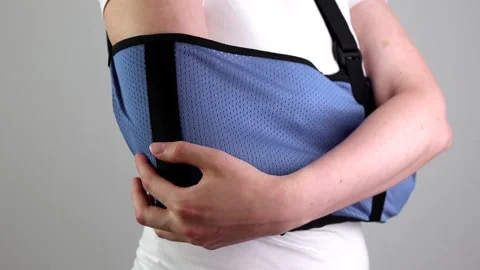
According to data from the Swedish Fracture Register, proximal humerus fractures peak during the winter months (December to February), likely due to the increase in slips and falls due to the icy conditions. This is especially true for elderly patients. Luckily, the majority of these patients (those with minimally displaced fractures) can be treated nonoperatively. In recent years, shorter periods of immobilization have been suggested to allow patients to return to activities of daily living sooner.
Examining this further, a high-impact article published in the Journal of Bone and Joint Surgery compared one- and three-week immobilization protocols for the nonoperative management of proximal humeral fractures.
A total of 143 patients requiring nonoperative treatment for proximal humerus fractures were randomized to undergo either a 1-week immobilization (n=67) or 3-week immobilization (n=76) protocol. Outcome of interest include the visual analogue pain scale (VAS), functional outcomes measured with the Constant score and Simple Shoulder Test (SST) and complications.
-
No significant differences in pain scores were found at any time point.
-
Similarly, no significant difference in functional outcomes were found at any timepoint.
-
No differences in complications were found between the two groups
Bottom line. In patients with nonoperative proximal humerus fractures, a 1-week immobilization period provided similar functional outcomes and pain levels without increasing complication rates compared to a 3-week period of immobilization.
You can check out our deep dive on this study here.
|
|
EDITOR’S PICKS |
|
|
|
Why Are We So Bad at Getting Better? – Dhruv Khullar, practicing physician at Weill Cornell Medicine and contributing writer at The New Yorker, discusses the art of convalescence and how over time it has been lost. (Read More) |
|
|
|
Curiosity in Clinical Care – A reflection on how standardized care is often practiced by default, not by choice. Internal physician Anup Agarwal gives personal insight into what is lost when a more mechanical approach care trumps a physician’s natural curiosity. (Read More) |
|
|