|
|
|
 |
|
Presented by OrthoEvidence |
|
|
|
|
|
|
Good Morning.
It's not every day we see an orthopaedic RCT in the New England Journal of Medicine.
Just a couple of months ago, researchers from 4 hospitals in the United States published an almost 900-patient RCT exploring the effect of adding physical therapy and motivational text messages to home exercise regimens in meniscal tear patients, with quite interesting results.
Read on to see what they found! |
|
In today's edition: |
|
🏥 Ortho in the NEJM |
|
📰 New trauma devices on the market |
|
🎙️ Predicting the future of ortho in 2026 |
|
|
|
PHYSICAL THERAPY & REHAB |
|
|
 |
|
The proportion of people with meniscal tears, particularly in patients with osteoarthritis, can be as high as 80%. Torn menisci is therefore a major orthopaedic problem to be solved -- and the cause of over 400,000 yearly arthroscopic partial meniscectomies in the US alone.
Several randomized trials have found physical therapy to be as effective as arthroscopic partial meniscectomy, however, it is unclear whether those benefits were derived from the exercises themselves, the interaction with physical therapists, or both. The TeMPO trial, just published in the New England Journal of Medicine, aimed to find out whether adding motivational text reminders or in-clinic physical therapy to a home exercise program would result in improved clinical outcomes vs. home exercise alone.
879 patients with knee pain, osteoarthritis, and meniscal tears were randomized to receive either home exercise alone, home exercise plus text messages to encourage adherence, home exercise plus text messages plus sham physical therapy, or home exercise plus text messages plus real physical therapy. The primary outcome of interest was the improvement over 3 months in knee pain on the KOOS subscale.
-
There were no meaningful differences between the four groups in knee pain severity at 3 months post-treatment.
-
The proportion of patients who failed treatment were similar in all four groups, between 29.5% and 34.8%.
-
The addition of in-clinic physical therapy appeared to improve pain at 6 months, although this was a secondary analysis without adjustment for multiplicity.
-
Motivational text messages were not associated with any differences in adherence to exercise or pain outcomes
Bottom line. The addition of physical therapy or motivational text messages did not appear to improve pain relief in those already on a home exercise regimen, for patients with degenerative meniscal tears and knee pain.
Read the full ACE Report on this study here.
|
 |
|
ORTHOPAEDIC NEWS |
|
|
 |
|
BlueOcean Global secured clearance for its Excelsior external fixation system(K253291), a next-generation circular fixator that supports bone reconstruction and soft tissue management in complex cases such as trauma, infection, Charcot reconstruction, and chronic non-healing wounds, guided by a procedural framework called FASTR (Fixator Assisted Soft Tissue Repair).
Toetal Solutions received clearance for its ZipToe Hammertoe Fusion System (K253325), a pre-loaded intramedullary implant kit designed to enable consistent fixation and streamlined surgical workflow for proximal interphalangeal joint arthrodesis in hammertoe procedures. Both clearances mark these companies’ initial entries into the trauma device market.
Read the full article here.
Sourced from BoneZone |
|
|
OE PODCASTS |
|
|
 |
|
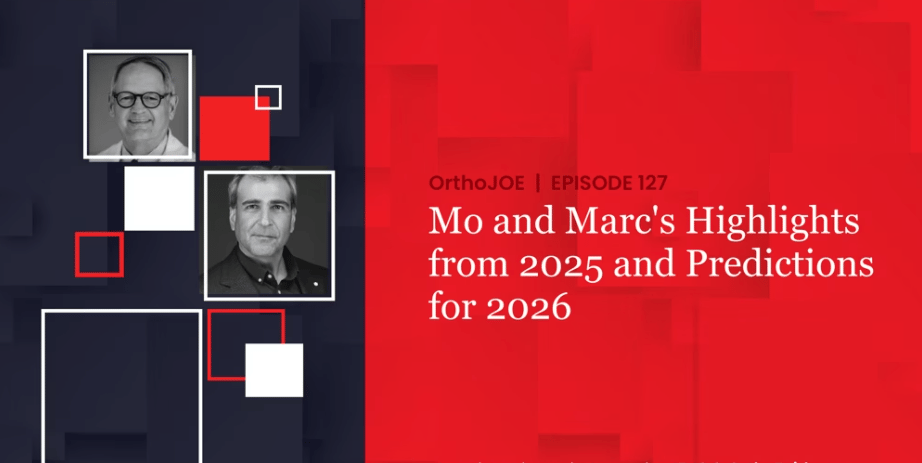
So what happened in 2025 and what can we expect in 2026?
In this episode of the OrthoJoe podcast, Mo and Marc talk about the most popular JBJS research in 2025, from a robust trial showing early weight-bearing after ankle fracture fixation is safe for most patients, to objective sleep-tracking data revealing substantial sleep loss on home call for surgeons and residents.
The discussion then turns to alignment strategies and robotics in total knee arthroplasty, cemented versus cementless fixation, and how AI-driven, trial-focused tools like OE’s chatbot may reshape journal clubs and guideline development, while emphasizing skepticism, traceability to primary data, and preserving human creativity.
Watch the full podcast here.
|
|
LATEST ORTHOPAEDIC RESEARCH |
|
|
|
Efficacy of Tranexamic Acid with Absorbable Hemostat to Reduce Perioperative Blood Loss in TKA – In patients undergoing primary TKA, does treatment with tranexamic acid combined with absorbable hemostat compared with tranexamic acid alone or absorbable hemostat alone reduce perioperative blood loss and anemia and improve early functional recovery? (Read)
(Read)
(Read)
(Read)
(Read)
(Read)
(Read)
(Read) (Read) |
|
|
|
Lateral Retinacular Release During MPFL Reconstruction – In patients with recurrent patellofemoral instability undergoing medial patellofemoral ligament reconstruction (MPFL) without associated bony procedures, does MPFL+lateral retinacular release compared with isolated MPFL result in superior subjective knee function or altered patellar tilt? (Read)
|
|
|
|
Analgesic Efficacy in Erector Spinae Plane Block in Patients Undergoing Lumbar Spine Fixation – In patients undergoing single-level lumbar spine fixation, does erector spinae plane block using 10 ml, 15 ml of local anesthetic, or 20 ml, result in non-inferior postoperative opioid consumption and pain control? (Read)
|
|
|



