|
7 March 2024 | Volume 1 Issue 23 |
|
|
|
|
|
|
|
|
|
|
|
 |
|
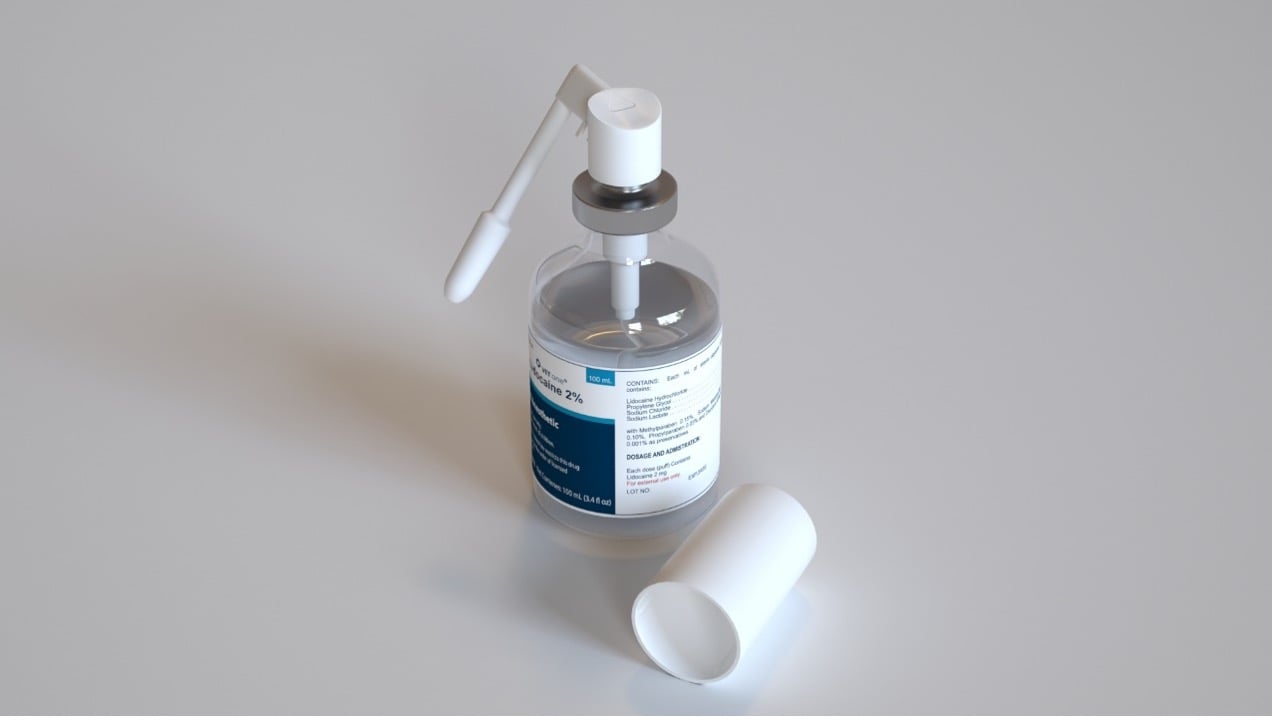
Chest trauma commonly results in rib fractures which are excruciatingly painful – and notoriously difficult to manage. Topical NSAIDs, such as lidocaine patches, have been used as analgesia for musculoskeletal pain, with many studies showing their effectiveness. However, less is known about the efficacy of topical sprays. This study compared and evaluated the efficacy of pain management offered by 10% lidocaine spray and etofenamate spray for rib fractures.
84 patients over 18 years of age with isolated rib fractures were included in this single-center, prospective, placebo-controlled trial. Patients were randomly allocated to receive either 10% lidocaine spray (LS; n=29), etofenamate spray (ES; n=28) or placebo spray (PS; n=27). The primary outcome of interest was pain intensity measured using a numerical rating scale (NRS) at baseline, and 15, 30, 60, and 120 minutes. Additional outcomes of interest included rescue medication requirements and adverse events.
-
All three groups demonstrated similar NRS scores, with no significant difference in pain reduction found at any time point.
-
The maximum reduction between baseline and 120 minutes was seen in the LS group, however this difference was not statistically significant.
-
The need for rescue medication was also the lowest in the LS group; a difference that was found to be clinically significant, but not statistically significant.
-
One adverse event was reported in the ES group, with a patient reporting skin redness.
Bottom line. Although LS was associated with moderate improvements in pain and rescue medication requirements, no significant difference was found between the two analgesic sprays and a placebo spray!
Read the full ACE Report on this RCT here. |
 |
|
|
|
|
 |
|
“I’m a bit harsher on some of the female trainees than the male ones, maybe because I know how difficult it is in some ways to get into the ‘club’. So, I expect them to do a little bit more…Now I feel that there are opportunities just for females [and female trainees] say to me ‘they are only giving it to me because I am female. They are not giving it to me because of what I do. So, what should I do then?’ and I say just grab the chance and prove to everyone that you can do it. I think that’s the only way.”
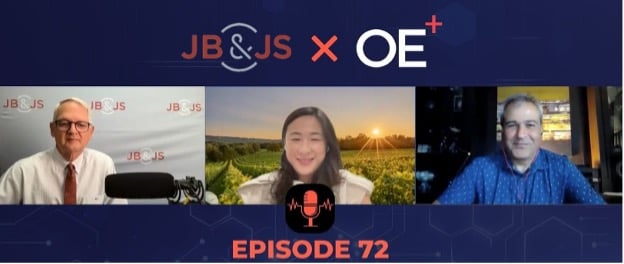
In this episode, Marc and Mo are joined by special guest Margaret Fok (Queen Mary Hospital, University of Hong Kong, SICOT) in a discussion on mentorship, diversity, embracing change, seizing opportunity, and the impact of patient expectations on outcomes.
Listen to or watch the entire conversation. |
|
|
|
|
|
 |
|
Nearly 8% of the global population has osteoarthritis, with the knee being the most affected joint. With this number set to increase by 74% by 2050, determining effective treatments that avoid typical pharmacological interventions, such as NSAIDs or corticosteroids (which often come with a long list of side effects and contraindications), and prolong the need for surgery is of interest.
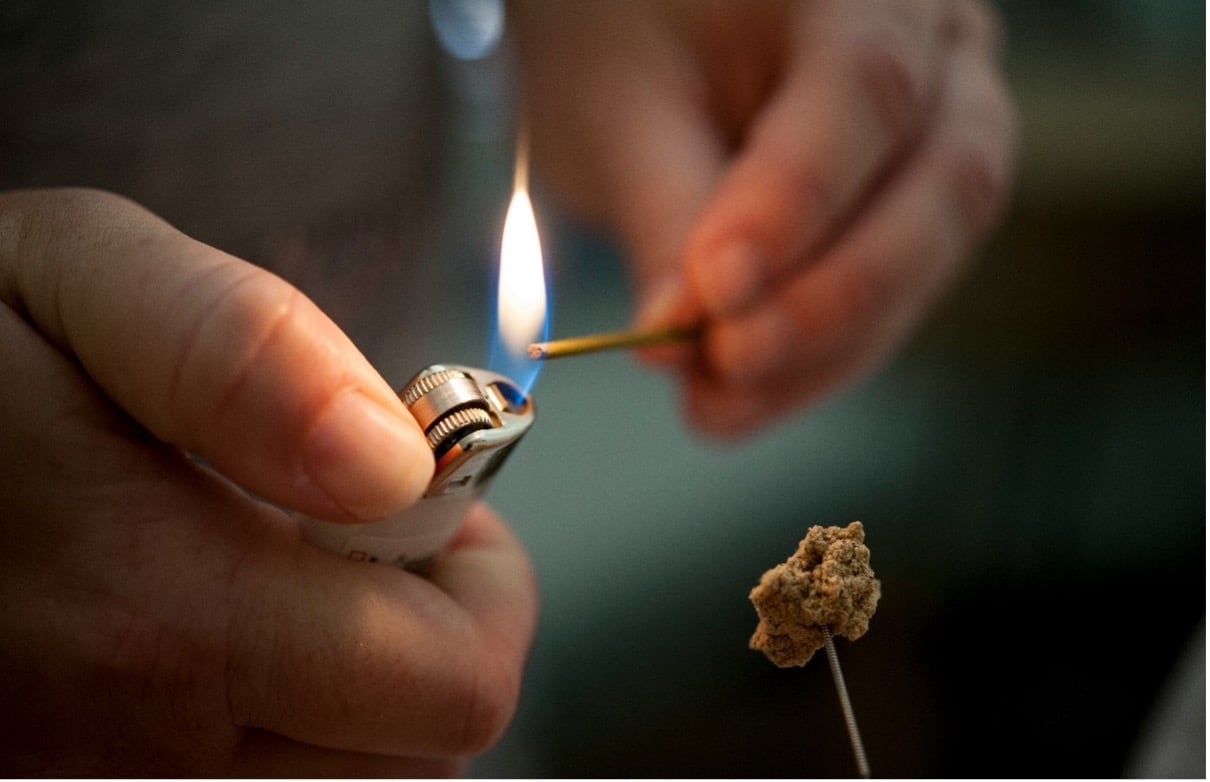
Chinese medicine has been an advocate of moxibustion, a treatment which works on the principles of warming. However, traditional moxibustion can come with an irritating smoke. Therefore, this study aimed to compare the clinical effects of traditional moxibustion to an alternative, jade moxibustion (JM), as it does not produce smoke and has the added benefit of anti-inflammatory effects.
94 patients with knee osteoarthritis were included in this non-inferiority trial in which patients were randomly allotted to undergo either traditional moxibustion (TM; n=44) or jade moxibustion (JM; n=45). The primary outcome of interest was quality of life, measured by the short-form health survey (SF-36) at 8,12 and 24 weeks. Secondary outcomes of interest included the Western Ontario and McMaster Universities Osteoarthritis Index (WOMAC) knee stiffness scores at 2, 4, 8, 12, and 24 weeks, and serum levels of osteoarthritis-related cytokines at 4 weeks. Adverse events were also recorded.
-
JM significantly improved role-physical and physical functioning SF-36 scores at 24 weeks compared to TM.
-
WOMAC knee stiffness scores showed significant improvement from baseline for both groups, however no significant between-group differences were found.
-
Serum COMP, MMP-13 and MCP-1 levels in the JM group and serum IL-1β, IL-2, IL-6, MMP-3 and IL-8 levels in the TM group fell significantly, although no significant differences were observed between groups.
-
Rates of adverse events were similar for both groups.
Bottom line. Jade moxibustion appears to be equally efficacious as traditional moxibustion in improving quality of life, reducing stiffness and decreasing inflammatory markers in KOA patients while also providing a smoke-free environment!
Check out our full ACE Report on this paper. |
|
EDITOR’S PICKS |
|
|
|
A Global Look at Healthcare Waste – In this OE Insight, we examine healthcare’s global environmental footprint and the issues currently facing the well-established practice of throwing things away. We also look at how health systems around the world are discovering ways to better align our efforts to provide high-quality care with those aimed at sustaining the world in which we live. (Read) |
|
|
|
Basic Science as a Clinical Research Tool – In OrthoJoe Episode 81, Dr’s Marc Swiontkowski and Mohit Bhandari discuss the value of basic science research for contributing to clinical decision-making, and what to consider when applying the biomechanical studies in your own practice. (Watch) |
|
|
|
|
|
|
|
|
PS. Enjoying The Pulse? Make sure to move it to your primary inbox so you don't miss it!
Any topics you would like to see covered?
Send your ideas to info@myorthoevidence.com
|
|
|
|
|
|
|
|
|
This email was brought to you by OrthoEvidence |
|
|
|
|