|
|
|
|
|
|
|
|
|
Randomized trial with over 5,000 patients finds aspirin alone to be non-inferior to rivaroxaban + aspirin. |
 |
|
Venous thromboembolism is among the most fear complications in arthroplasty.
Rivaroxaban is commonly used post-op for prophylaxis -- but recent studies have shown combining it with aspirin is equally as safe and effective.
But the question could be taken a step further -- could aspirin alone post-op be sufficient?
The EPCAT III trial, published in NEJM, randomized 5,429 patients to find out. They found almost no difference in the risk of venous thromboembolism or bleeding events.
Given its low cost, it could offer a more simplified and accessible strategy. |
|
|
|
Full Analysis → |
|
|
|
|
|
|
|
|
|
|
|
Retrospective analysis of 33,747 TKA procedures aims to analyze the effect of surgeon volume on rates of surgical site infection and PJI. |
 |
|
Does surgeon volume predict TKA infection? Retrospective analysis of 33,747 TKA procedures aims to analyze the effect of surgeon volume on rates of surgical site infection and PJI. Surgeon volume may not impact infection risk in patients undergoing primary total knee arthroplasty, according to results from a recent retrospective analysis.
Westrich and colleagues retrospectively analyzed data from 33,747 primary TKA procedures. Surgeons were stratified as low-volume (250 cases per year) based on annual TKA case volume. Outcome measures included rates of superficial surgical site infection and PJI.
Overall, Dr. Geoffrey Westrich and colleagues found that rates of superficial surgical site infection and PJI were not significantly different between low-volume, high-volume and ultra-high volume surgeons, despite differences in surgical duration.
Instead, Westrich said assessment of patients’ modifiable risk factors, like smoking cessation, diabetes management and weight loss for obesity, were much more predictive of infection prevention vs. surgeon volume.
|
|
|
|
Read the Article → |
|
|
|
|
|
|
|
|
 |
|
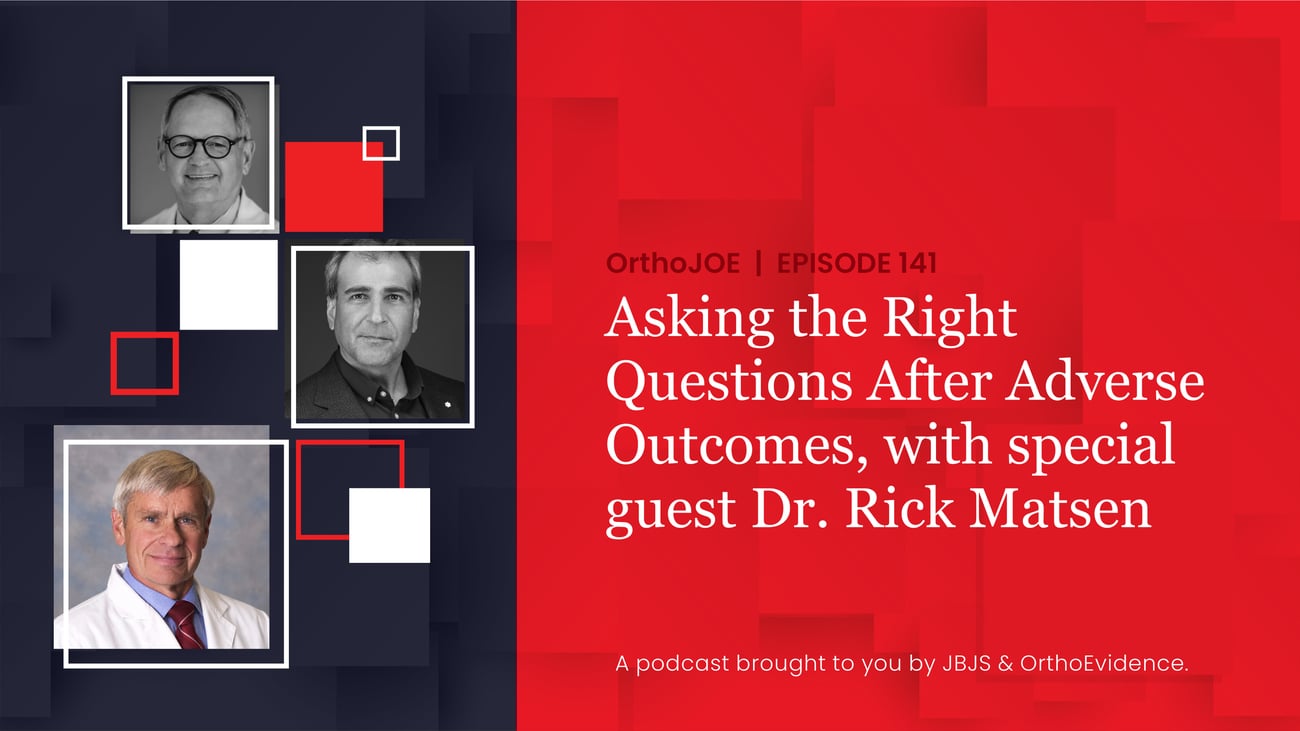
Orthopaedic outcomes cannot be understood through revision rates, imaging, or technical precision alone.
Special guest Dr. Rick Matsen challenges surgeons to ask a more fundamental question: how are their patients actually doing? By systematically following individual outcomes, especially poor ones, surgeons can identify root causes, question whether new technologies address real clinical problems, and refine their own practice.
The discussion reframes quality improvement around accountability, patient priorities, careful selection, and a willingness to learn from failure. |
|
Watch Now → |
|
|
|
|
|
Clinical Efficacy and Safety of Perioperative Systemic Glucocorticoids in Primary Unilateral Total Hip Arthroplasty — In adult patients undergoing primary unilateral total hip arthroplasty, does perioperative systemic glucocorticoid administration, compared with placebo or standard care without systemic glucocorticoids, improve postoperative pain, postoperative nausea and vomiting, opioid consumption, glycemic control, inflammatory response, functional recovery, and safety outcomes?
(Read)
(Read)
(Read)
(Read)
(Read)
(Read)
(Read) (Read) |
|
|
|
Discharge Planning Services for Safe Transition After hip Fracture —In adults with hip fractures, do structured discharge planning services, compared with usual care or standard postoperative management without structured discharge planning, improve readiness for hospital discharge, self-care ability and functional recovery and reduce complications?
(Read)
(Read)
(Read)
(Read)
(Read)
(Read)
(Read) (Read) |
|
|
|
Dual Mobility Cemented vs Cementless Cups in Primary Total Hip Arthroplasty — In older patients undergoing primary THA with dual mobility acetabular cups, does cemented acetabular fixation, compared with cementless fixation, produce differences in pain at rest and during activity, functional outcomes, polyethylene wear, and cup migration?
(Read)
(Read)
(Read)
(Read)
(Read)
(Read)
(Read) (Read) |
|
|
|
Two ways to inform your clinical decisions |
FastTrack — what your peers are reading across the network
OE Signal — personalized weekly evidence based on your interests |
|
|
|
|