|
25 January 2024 | Volume 1 Issue 14 |
|
|
|
|
|
|
|
|
|
|
|
 |
|
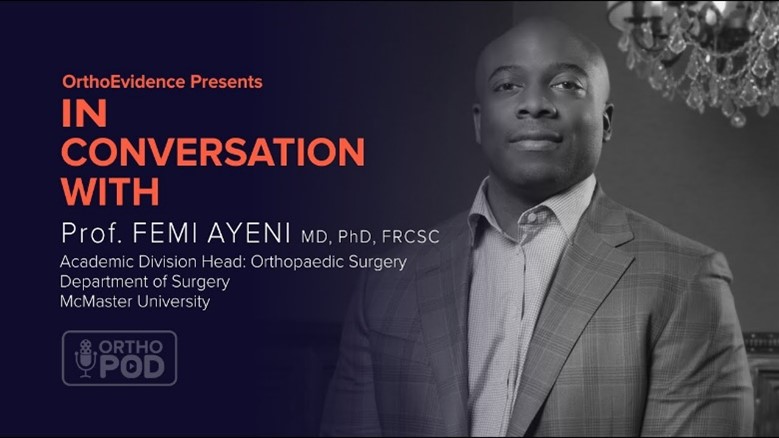
“The end result of your career…is a combination of how hard you work, and how good your strategy is.”
We sat down with Dr. Femi Ayeni, the current academic division head at McMaster Orthopaedics, for a discussion on leadership, research, and career building. Dr. Ayeni’s career has taken him across the world, from New York to Gothenburg, Sweden – he is the current President-Elect of the COA, the Director of the MACSports fellowship, Editor-in-Chief of ISAKOS, and Medical Director of the Hamilton Tiger Cats and Forge FC sports teams, among many other positions.
He discusses his early career and research endeavours, the importance of mentorship, how to think strategically about your career, and how to become a better writer.
Watch the full interview with Dr. Ayeni here.
|
 |
|
|
|
|
 |
|
Prophylaxis is recommended for major orthopaedic surgery, but there’s a lack of consensus around thromboprophylaxis in non-major surgeries – in the US its not required, but in Europe, guidelines recommend it.
Enoxaparin and rivaroxaban have been used in total hip and knee replacement, with recent research finding lower risk of symptomatic venous thromboembolism and death with rivaroxaban. This trial, published in the NEJM, aimed to compare the effect of rivaroxaban with enoxaparin in lower-limb non-major orthopaedic surgery.
This non-inferiority RCT randomized 3,604 patients scheduled to undergo a non-major lower-limb orthopaedic surgery to receive 10mg of oral rivaroxaban once daily (n=1,809) or 40mg of subcutaneous enoxaparin (n=1,795) until the end of immobilization. Patient blinding was maintained with placebo injections and oral placebo pills, respectively. The primary outcome of interest was the incidence of major venous thromboembolism.
-
The incidence of major venous thromboembolism was significantly higher in the enoxaparin group compared to the rivaroxaban group (0.2% vs. 1.1%, p<0.001 for non-inferiority; p=0.01 for superiority).
-
The incidence of bleeding and mortality was similar in both groups.
Bottom line. Rivaroxaban was found to be significantly more effective in preventing venous thromboembolic events after non-major lower limb orthopaedic surgery than enoxaparin, with no increased risk of bleeding.
Check out the comprehensive analysis of this paper in our ACE Report. |
|
|
|
|
|
 |
|
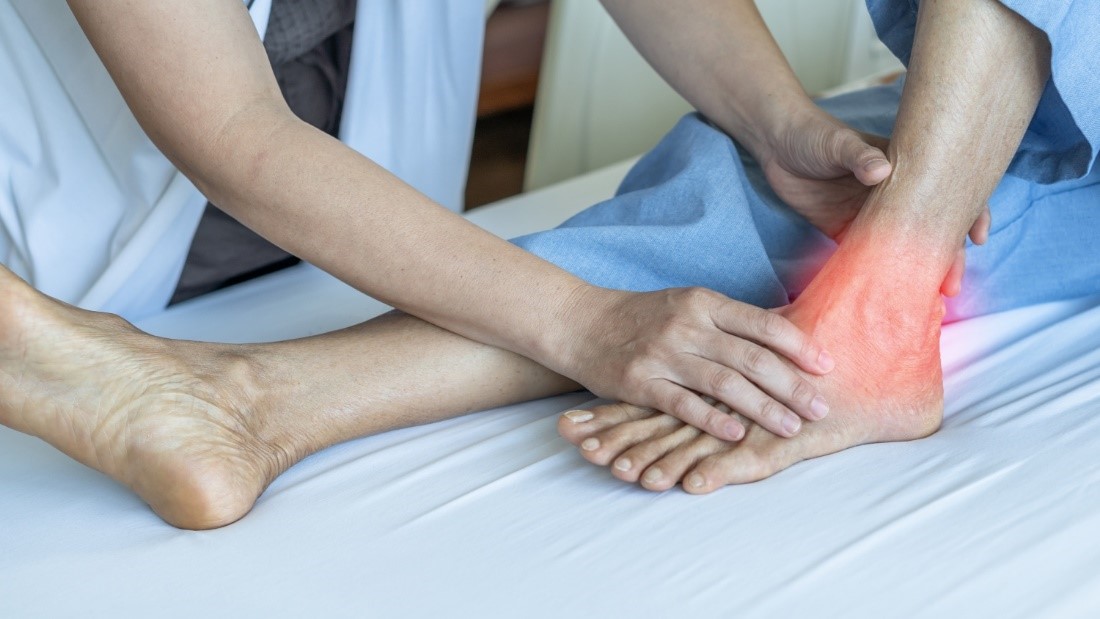
The modified Brostrom-Gould (MBG) procedure has long been considered the preferred surgical intervention for chronic ankle instability. However, biomechanical studies have suggested that the MBG might not be able to return the full strength of the native ligament.
An alternative approach is the use of suture taping in lateral ligament augmentation. With several RCTs comparing the two interventions, a systematic review and meta-analysis was of interest.
We found 5 RCTs, with a total of 328 patients with chronic ankle instability. Studies were conducted in South Korea, Australia, the USA, and Turkey.
-
No significant differences in pain scores were observed between the two procedures at 6-12 months and 24-36 months post-operation.
-
Similarly, Foot and Ankle Outcome Scores (FAOS) were not significantly different in both groups at 6-12 months and 24-36 months post-operation.
-
The risk of recurrent instability and local wound infection was similar in both groups.
Bottom line. The current evidence on lateral ligament augmentation found suture taping to be neither superior nor inferior to the modified Brostrom-Gould procedure in terms of safety and efficacy with patients with chronic ankle instability. However, with limited high-quality evidence, future studies are required to confirm these findings.
Check out the full OE Original here.
|
|
EDITOR’S PICKS |
|
|
|
Most Impactful Article in 2023 & 2024 Predictions – In this OrthoJoe podcast, Dr’s Mohit Bhandari and Marc Swiontkowski discuss the most impactful articles of 2023, and what is to come in the world of orthopaedics for 2024. Topics of discussion include the potential benefits and problems of AI in orthopaedics, the future focus on prevention of surgical intervention, and non-inferior alternatives to standard of care interventions.
(Watch) |
|
|
|
Lateral Pinning vs. Cross-pinning for Supracondylar Humerus Fractures – In this study, 22 randomized trials with a total of 1,502 supracondylar humerus fracture patients were included in this systematic review and meta-analysis comparing lateral pinning and cross-pinning. The odds of ulnar nerve injury were significantly higher in the lateral pin group, with no significant differences in Flynn grade, infection, or Baumann angle. (Read) |
|
|
|
|
|
|
Mini-Masters Series: Study Designs – The selection of an appropriate study design is a critical and foundational step in scientific research, dictating the process and methods of data collection, analysis, and interpretation. In this Original, we do a deep dive into the world of study designs, elucidating their unique characteristics, strengths, and limitations in the context of scientific inquiry. (Read) |
|
Did you enjoy this newsletter? |
|
✅ I enjoyed it! |
|
😐 It was nothing special |
|
👎 I'm not a fan... |
Thanks for reading! |
|
|
|
|
|
|
|
|
PS. Enjoying The Pulse? Make sure to move it to your primary inbox so you don't miss it!
Any topics you would like to see covered?
Send your ideas to info@myorthoevidence.com
|
|
|
|
|
|
|
|
|
This email was brought to you by OrthoEvidence |
|
|
|
|