|
|
|
|
|
|
|
|
|
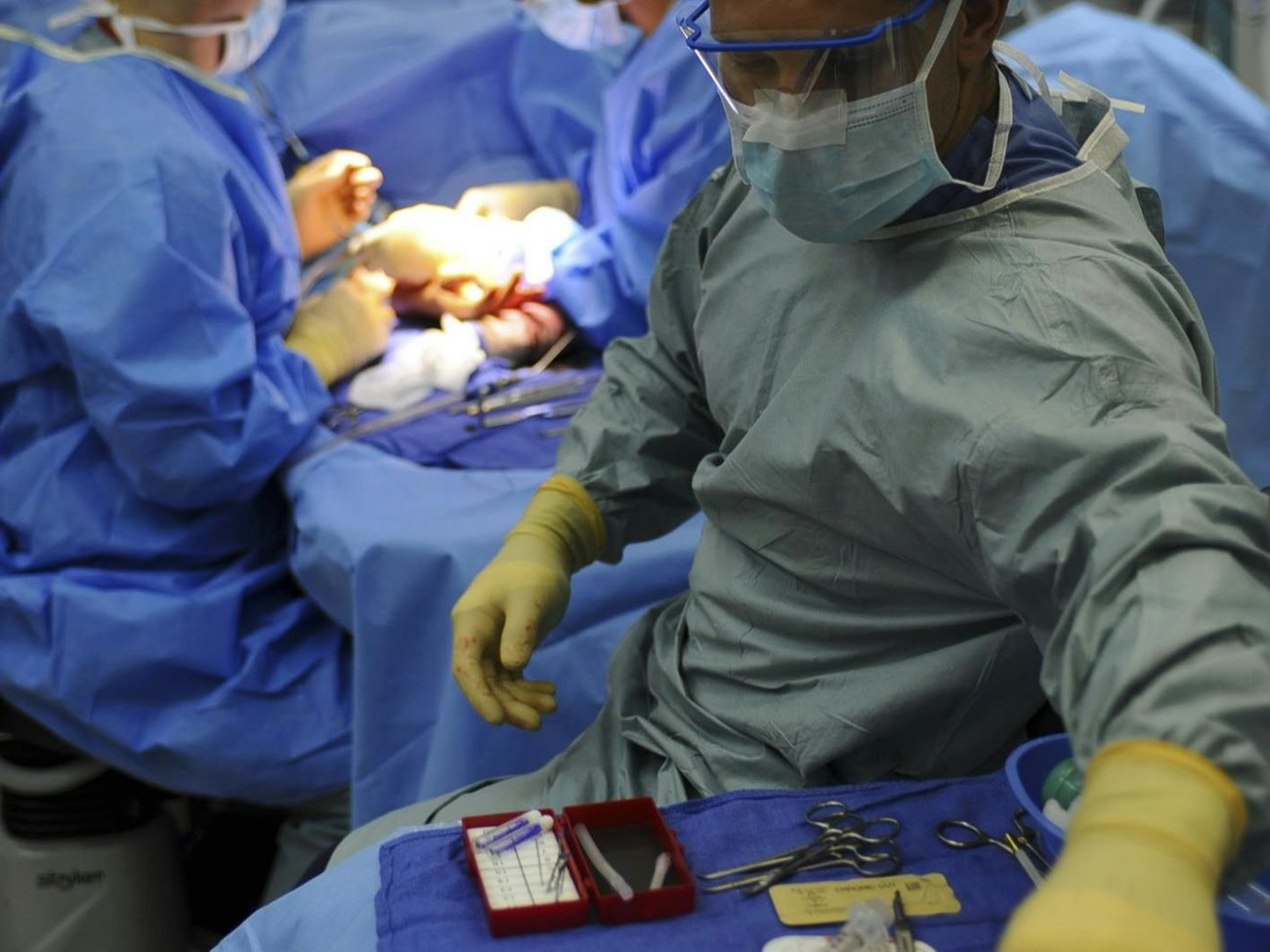
Meta-analyses of close to 400,000 arthroplasty patients finds no effect of prior bariatric patients, and possibly a risk of harm. |
 |
|
Bariatric surgery is often, and increasingly, offered to obese patients prior to arthroplasty.
The idea is that doing so can reduce the risk of complications, and ultimately improve post-operative outcomes.
A growing list of studies have been performed on the issue -- but with no definitive meta-analysis and mixed findings, there was a need for an updated and high-quality synthesis of the literature.
In this meta-analysis of 19 studies with 391,964 arthroplasty patients, researchers found:
No effect of prior bariatric surgery the risk of periprosthetic infection, fractures, or revision rates.
A higher risk of dislocation among patients with total hip arthroplasty patients who received a prior bariatric surgery.
The result throws conventional and theoretical wisdom into question. |
|
|
|
Full Analysis → |
|
|
|
|
|
|
|
|
|
|
|
New bench-side developments point to a future where vaccines could help reduce the risk of device infection. |
 |
|
2 to 4% of arthroplasty implants become infected.
But there might be a vaccine to solve that in the near future.
A recently published study in the Proceedings of the National Academy of Sciences reported that a biomaterials-based vaccine reduced bacterial burden in mice by 100-fold.
There was also evidence of cross-protection outside of S. aureus -- the primary culprit of device infection.
“One could envision a future in which clinical researchers rapidly identify relevant PAMPs in patient-specific S. aureus strains obtained through simple non-invasive procedures ahead of surgeries to produce effective personalized biomaterial vaccines that protect implanted devices from infections,” Dr. Tatara said.
|
|
|
|
Read the Article → |
|
|
|
|
|
|
|
|
 |
|
How do we know an orthopaedic surgeon is truly ready to practise independently?
There are a wide variety of examination strategies in orthopaedics. But oral examinations and written tests often don't tell the full picture.
Particularly in surgical practice, there's an increased onus to self-regulate and ensure that all surgical trainees achieve acceptable levels of comptency.
In this edition of the OrthoJoe podcast, Marc & Mo sit down [again!] with Dr Bradley Petrisor for a conversation on the need for competency-based certifications in orthopaeidcs. |
|
Watch Now → |
|
|
|
|
|
Wound Complications After Cast Immobilization vs. Early Functional Treatment in Surgical Fixation of Ankle Fractures — In skeletally mature patients undergoing surgical fixation of ankle fractures, does postoperative cast immobilization for more than 2 weeks, compared with early functional treatment, reduce wound complications?
(Read)
(Read)
(Read)
(Read)
(Read)
(Read)
(Read) (Read) |
|
|
|
Intramedullary Nailing vs. Sliding Hip Screw for Trochanteric Fractures —In adults with unstable trochanteric femoral fractures, does intramedullary nailing compared with sliding hip screw fixation, improve mortality, reoperation rates, complications, pain, function, mobility, and surgical outcomes?
(Read)
(Read)
(Read)
(Read)
(Read)
(Read)
(Read) (Read) |
|
|
|
Effectiveness and Safety of Probiotics in Treating Knee Osteoarthritis — In patients with knee osteoarthritis, does probiotic supplementation, compared with placebo or control treatment, improve pain, WOMAC outcomes, and inflammatory markers without increasing adverse events?
(Read)
(Read)
(Read)
(Read)
(Read)
(Read)
(Read) (Read) |
|
|
|
Two ways to inform your clinical decisions |
FastTrack — what your peers are reading across the network
OE Signal — personalized weekly evidence based on your interests |
|
|
|
|