|
|
|
|
|
|
|
|
 |
|
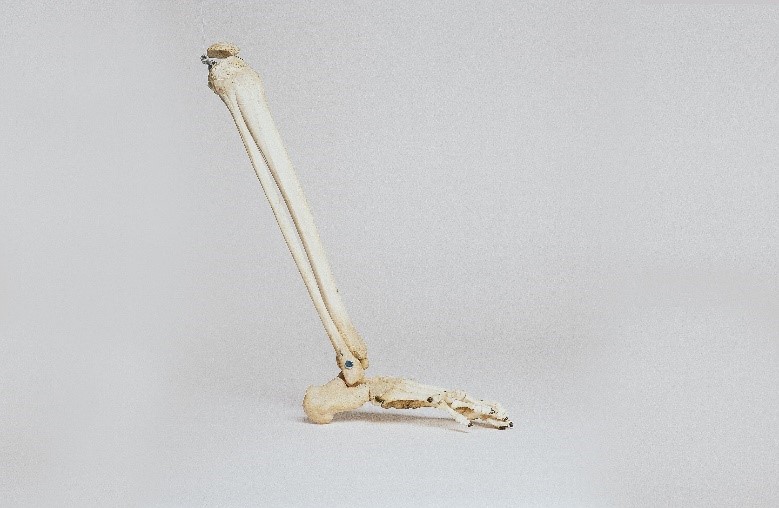
Pain. Disability. Reduced quality of life. Ankle osteoarthritis is a significant burden for patients, caregivers, and the healthcare system. And if ankle osteoarthritis reaches end-stage, surgical intervention may be necessary.
Total ankle replacement and ankle arthrodesis are two surgical procedures that have demonstrated good outcomes. However, they are very different treatments, with one fusing the bones to limit joint movement and the other replacing the joint to retain movement. There is a lack of high-quality evidence comparing the two: the TARVA study, published in Annals of Internal Medicine, aimed to be the first multicentre RCT to compare the two treatments.
From 17 NHS sites across the United Kingdom, this pragmatic, open-RCT randomized 303 patients with ankle osteoarthritis to receive either total ankle replacement (n=152) or an arthrodesis (n=151). The primary outcome of interest was the Manchester-Oxford Foot Questionnaire (MOXFQ) walking/standing domain.
-
At 52 weeks post-operation, all MOXFQ walking/standing scores not clinically or statistically different between the two groups.
-
At 52 weeks post-operation, the replacement group demonstrated better improvement in range of motion and activities of daily living scores.
-
The incidence of adverse events was similar in both groups; the replacement group had a higher rate of wound healing issues, while the arthrodesis group had more thromboembolic and non-union events.
-
Post-hoc analyses found significantly better outcomes with fixed-bearing total ankle replacement vs. arthrodesis.
Bottom line. Both arthrodesis and total ankle replacement provided similar clinical and safety outcomes. However, results suggest a potential superiority of fixed-bearing total ankle replacement.
Check out the comprehensive analysis of this paper here.
|
 |
|
|
|
|
 |
|
Chronic non-specific low back pain is one of the most pervasive and debilitating condition seen in clinic. Aquatic exercise has been suggested as an effective treatment, but what does the evidence say?
We conducted a systematic review and meta-analysis of randomized controlled trials comparing aquatic exercise to a land-based exercise, usual care, or no exercise. We looked at pain, disability, and safety outcomes, and assessed the risk of bias and quality of the evidence!
We found 13 eligible studies, including 580 patients. Aquatic exercise programs in the included studies ranged from 30–75-minute sessions, 2-3 times per week.
-
Pain after 12 weeks of treatment, as well as 2-3 months and 8-9 months post-treatment, were significantly in favour of the aquatic exercise group (p<0.05 for all).
-
Oswestry Disability Index scores were in favour of the aquatic exercise group after 4 weeks of exercise, while Roland-Morris Disability Questionnaire scores favoured the aquatic exercise group up to 8-9 months post-treatment.
Bottom line. Aquatic exercise is a promising intervention for patient with chronic non-specific low back pain, and could provide significantly better improvement in symptoms than standard care and other land-based exercise programs!
Check out the full systematic review and meta-analysis here.
|
|
|
|
|
|
 |
|
Research on subscapularis tendon tears is predominantly focused on larger tears – with surgical repair typically recommended. However, there is no consensus on the optimal treatment for partial subscapularis tears. With both surgical repair and debridement being options, a randomized trial comparing the interventions was needed.
This randomized controlled trial conducted in South Korea randomized 80 patients with subscapularis tendon tears with >50% detachment in the first facet and without complete disruption of the lateral band to receive either arthroscopic debridement (n=40) or arthroscopic repair (n=40).
Follow-up was conducted over a 5-year period and included clinical and radiological assessments.
-
External rotation was significantly better in the debridement group compared to the repair group at 1 ear post-operation (p=0.023). No differences in functional outcomes were observed at 2- or 5-years post-operation.
-
No differences in MRI evaluation outcomes were observed between the two groups.
-
The repair group demonstrated a better muscle power ratio than the debridement ratio at both 2- or 5-years post-operation (p=0.047; p=0.011, respectively).
Bottom Line. While both surgical interventions provided comparable functional and radiological outcomes up to 5 years post-operation, repair could lead to significantly better muscle power recovery for patients with partial subscapularis tears.
Read the full breakdown of this RCT in our ACE Report.
|
|
EDITOR’S PICKS |
|
|
|
The SPRINT Trial – With inconclusive evidence on whether reamed or unreamed intramedullary nailing for tibial shaft fractures was preferred, the SPRINT trial randomized 1,339 patients from 29 sites in 3 countries to find out. Results showed a potential benefit of reamed intramedullary nailing for patients with closed fractures, but no difference for open fractures. (Read More) |
|
|
|
Trial Reporting 101 – You could run the perfect randomized trial…but no one would ever know if it wasn’t reported well. The CONSORT statement has become the definitive reporting guideline for parallel group RCTs and is an essential companion for any trialist. There's also extensions for pilot trials, cluster randomized trials, and crossover trials. (Read More) |
|
|
|
|