|
|
|
|
|
|
|
|
|
1,600 patient international RCT finds substantial benefits with dual mobility total hip replacements. |
 |
|
Total hip replacement (THR) is a well-established treatment for displaced femoral neck fractures. But its not without its risks and limitations: specifically, dislocation.
The standard cup used in THR uses a small ball and socket design, which contributes to the etiology of dislocations. Could a dual mobility cup design be the solution?
The DUALITY Trial, a 1,600 person large international RCT aimed to find out.
The results were emphatic:
73% reduction in risk of dislocation.
55% reduction in risk of surgical complications.
No differences in infection risk or quality of life outcomes.
The evidence in support of dual mobility THR is now substantial. |
|
|
|
Full Analysis → |
|
|
|
|
|
|
|
|
|
|
|
Three new orthopaedic companies seek FDA clearance for innovations in spine surgery, soft tissue fixation and structural implants. |
 |
|
We all know the major orthopaedic companies -- Stryker, Zimmer Biomet, Medtronic -- focus heavily in innovation.
But there are several new start-ups developing next-generation products that could substantially change practice.
Lumbar decompression devices, next-generation bone sutures, and cervical implants are just some of the new technologies coming down the pipeline.
Sourced from BONEZONE | Julie A. Vetalice |
|
|
|
Read the Article → |
|
|
|
|
|
|
|
|
 |
|
In athletes, we focus a lot on getting injured players back on the pitch -- even if it requires surgery, and even if it costs a little more.
But that type of reasoning is often not applied to the average humeral shaft fracture patient.
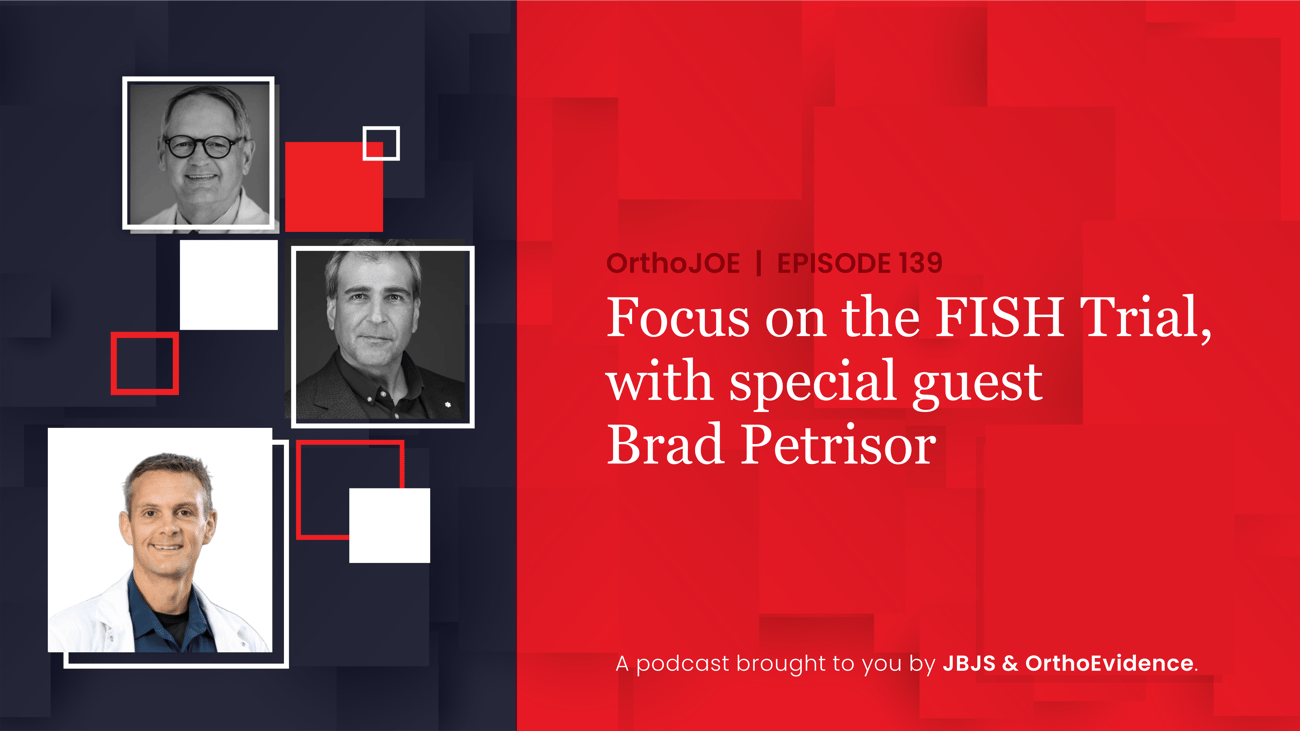
In this episode of the OrthoJoe podcast, Mo & Marc sit down with Dr Bradley Petrisor, surgeon and professor at McMaster University, about a recent cost-effectiveness analyses which found that surgery can accelerate recovery, return to work, and early function, making it more cost-effective from a societal perspective.
|
|
Watch Now → |
|
|
|
|
|
Chilling The Nerve, Easing The Pain?: An RCT Evaluating Surgeon-Administered Bedside Percutaneous Cryoneurolysis for Rib Fracture Pain — In adults with traumatic fractures, does surgeon-administered, ultrasound-guided bedside percutaneous cryoneurolysis added to standard multimodal pain management compared with standard care alone reduce pain and opioid use?
(Read)
(Read)
(Read)
(Read)
(Read)
(Read)
(Read) (Read) |
|
|
|
*Lancet* Patellar Resurfacing in Total Knee Replacement: 20-Year Clinical and Economic Results of a Large Multicentre RCT —In adults undergoing primary TKR, does patellar resurfacing, compared with no patellar resurfacing, improve knee function, quality of life, reoperation rates, and cost-effectiveness over 20 years?
(Read)
(Read)
(Read)
(Read)
(Read)
(Read)
(Read) (Read) |
|
|
|
Copenhagen Achilles Tendon Rupture Treatment Algorithm (CARTA) for Individualised Treatment of Acute Achilles Tendon Rupture — In adults with acute Achilles tendon rupture, does individualized treatment guided by the Copenhagen Achilles tendon Rupture Treatment Algorithm, compared with routine non-operative or operative treatment?
(Read)
(Read)
(Read)
(Read)
(Read)
(Read)
(Read) (Read) |
|
|
|
Two ways to inform your clinical decisions |
FastTrack — what your peers are reading across the network
OE Signal — personalized weekly evidence based on your interests |
|
|
|
|