|
|
|
|
|
|
|
|
|
Is supervised rehab necessary after non-operative treatment of displaced proximal humerus fractures? |
 |
|
The latest reviews have found non-operative treatment to be comparable to operative fixation for displaced proximal humerus fractures.
What is less certain is whether the traditional supervised rehab is necessary.
It has large resource implications for both patients and the system.
Could a single advice session suffice?
A recent clinical trial randomized 60 patients with proximal DHFs to receive either a referral for supervised, physiotherapist-led rehab or a single session of advice on return to daily activity.
They found no differences in should function, quality of life, or need for surgery.
The findings question the conventional wisdom of universal supervised rehab for all patients. |
|
|
|
Full Analysis → |
|
|
|
|
|
|
|
|
|
|
|
Retrospective analysis of 33,747 TKA procedures aims to analyze the effect of surgeon volume on rates of surgical site infection and PJI. |
 |
|
Surgeon volume may not impact infection risk in patients undergoing primary total knee arthroplasty, according to results from a recent retrospective analysis.
Westrich and colleagues retrospectively analyzed data from 33,747 primary TKA procedures. Surgeons were stratified as low-volume (<50 cases per year), high-volume (50-250 cases per year) and ultra-high volume (>250 cases per year) based on annual TKA case volume. Outcome measures included rates of superficial surgical site infection and PJI.
Overall, Dr. Geoffrey Westrich and colleagues found that rates of superficial surgical site infection and PJI were not significantly different between low-volume, high-volume and ultra-high volume surgeons, despite differences in surgical duration.
Instead, Westrich said assessment of patients’ modifiable risk factors, like smoking cessation, diabetes management and weight loss for obesity, were much more predictive of infection prevention vs. surgeon volume.
|
|
|
|
Read the Article → |
|
|
|
|
|
|
|
|
 |
|
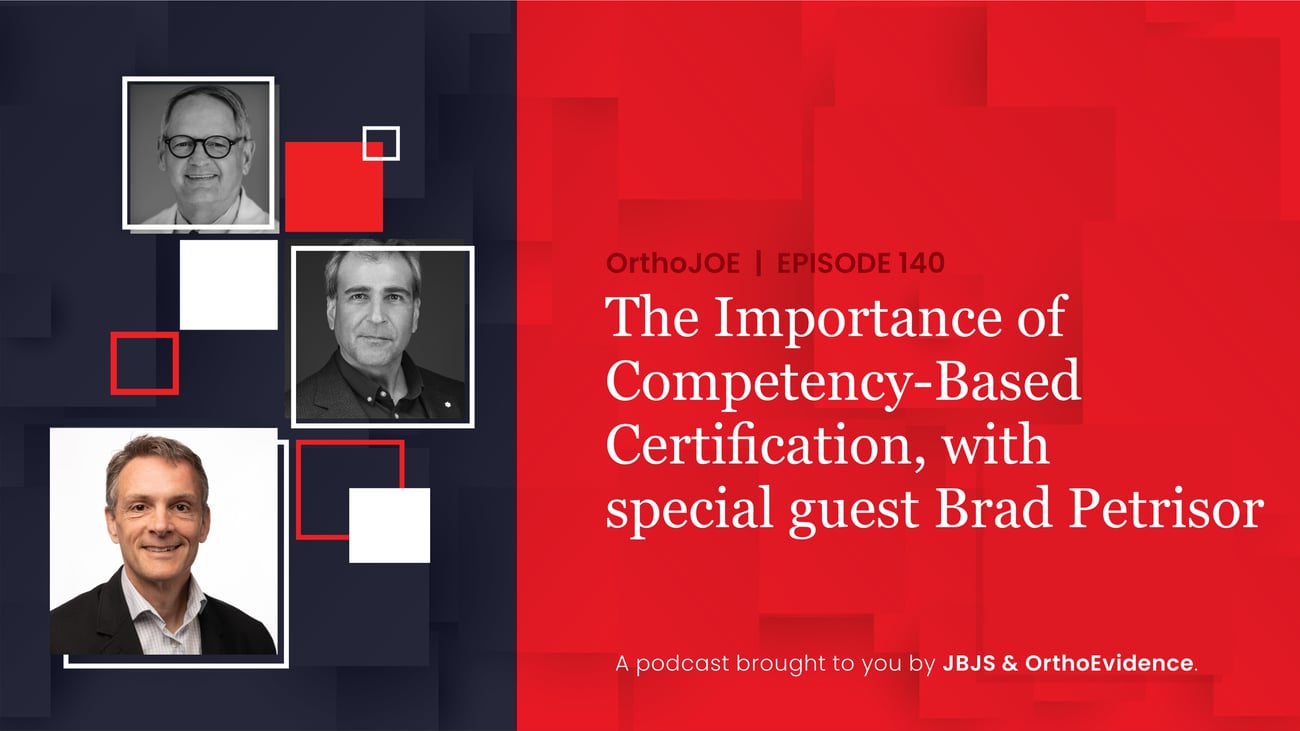
How do we know an orthopaedic surgeon is truly ready to practise independently?
There are a wide variety of examination strategies in orthopaedics. But oral examinations and written tests often don't tell the full picture.
Particularly in surgical practice, there's an increased onus to self-regulate and ensure that all surgical trainees achieve acceptable levels of comptency.
In this edition of the OrthoJoe podcast, Marc & Mo sit down [again!] with Dr Bradley Petrisor for a conversation on the need for competency-based certifications in orthopaeidcs. |
|
Watch Now → |
|
|
|
|
|
Enhancing Spinal Mobility and Functional Capacity Through Aerobic Exercise and Yoga in Ankylosing Spondylitis — In adults with ankylosing spondylitis, does a supervised yoga-based exercise program combined with aerobic exercise, compared with aerobic exercise alone, improve spinal mobility, functional capacity, disease activity, and cardiopulmonary outcomes?
(Read)
(Read)
(Read)
(Read)
(Read)
(Read)
(Read) (Read) |
|
|
|
Percutaneous Pedicle Screw Combined with Percutaneous Kyphoplasty for Osteoporotic Vertebral Compression Fractures with Endplate Depression —In older adults with single-level osteoporotic vertebral compression fractures with endplate depression, does percutaneous pedicle screw fixation combined with percutaneous kyphoplasty, compared with percutaneous kyphoplasty alone, improve vertebral reduction, maintenance of correction, pain, functional outcomes, and complication rates?
(Read)
(Read)
(Read)
(Read)
(Read)
(Read)
(Read) (Read) |
|
|
|
The Effect of TENS on Patient Outcomes After Total Knee Arthroplasty — In adults undergoing primary unilateral TKA, did postoperative TENS, in addition to routine care, improve pain and other patient-reported outcomes during the first 24 hours compared with routine postoperative care alone?
(Read)
(Read)
(Read)
(Read)
(Read)
(Read)
(Read) (Read) |
|
|
|
Two ways to inform your clinical decisions |
FastTrack — what your peers are reading across the network
OE Signal — personalized weekly evidence based on your interests |
|
|
|
|