|
|
|
|
|
|
A large multi-national RCT finds no clinical advantages with surgical treatment of medial epicondyle fractures in children.
|

|
The optimal method of managing pediatric medial epicondyle fractures has long been debated in the orthopaedic community. Both surgical and non-surgical approaches are supported by the literature, which limits the ability to make concrete evidence-based recommendations. With little randomized trial evidence on the topic, a SCIENCE Study aimed to compare the two two approaches to help settle the debate.
334 pediatric patients with displaced medial epicondyle fractures were randomized to receive surgical fixation or non-operative management (immobilization). The primary outcome of interest was upper limb function at 12 months, measured using the Patient Report Outcomes Measurement System (PROMIS) Upper Extremity Score for Children.
At all time-points up to 12 months, there were no significant differences in the primary outcome of upper limb function between the two groups (p>0.05 for all).
Similarly, at 12 months, no differences in quality of life or pain were observed between the two groups.
The cost per patient was £2,435 higher in the surgical treatment group compared to the non-surgical group, resulting in a 0% probability that surgical treatment is cost effective (at a £20-30k per QALY threshold).
|
|
|
Bottom Line: The results of this randomized trial suggest that surgical intervention offers no clinical advantages over non-operative treatment and costs substantially more, thus making non-operative treatment the most reasonable treatment option.
|
Full Analysis →
|
|
|
|
|
|
|
|
|
|
|
Meta-analysis data finds adding lateral extra-articular procedures to ACL reconstruction improves pain, function, stability, and the risk of rupture.
|
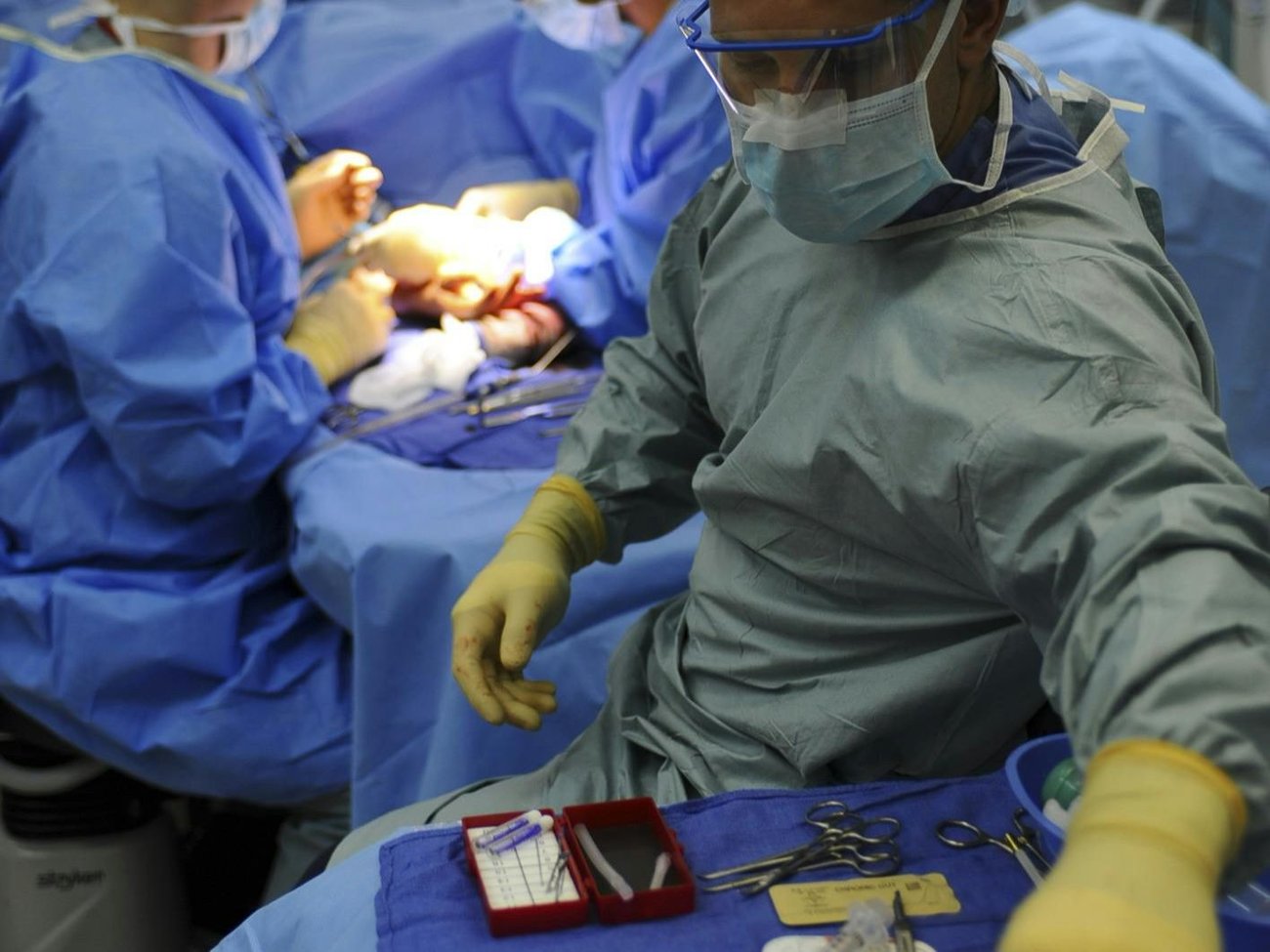
|
As much as 25% of patients undergoing ACL reconstruction experience anterolateral instability after ACL reconstruction. Performing a lateral extra-articular procedure (LEAP), like lateral extra-articular tenodesis (LET), prior to surgery has been studied extensively in the literature, and anecdotally, surgeons claim it to be useful. But does the evidence support it? This meta-analyses aimed to find out.
In this meta-analysis of 10 RCTs, investigators compared the efficacy of ACL reconstruction with or without a LEAP procedure. The outcomes of interest for this study included a range of clinical outcomes including but not limited to rotator instability, graft rupture, function, and pain scores.
With respect to self-reported function, ACL reconstruction patients who underwent the LEAP procedure reported superior functional scores (IKDC) at 6 months, but no differences at 12 or 24 months.
With respect to pain, patients who underwent a LEAP procedure reported less pain at 6 months post-operation, but no difference at 12 or 24 months.
Pooled quantitative and qualitative results indicate reduced pivot shift at 6 months with LEAP procedure.
LEAP procedure is also associated with a lower risk of graft rupture at 12 and 24 months.
|
|
|
Bottom Line: The addition of a LEAP procedure prior to primary ACL reconstruction appears to improve short-term pain, function and stability, and lower the risk of graft rupture up to 2 years post-operation.
|
Full Analysis →
|
|
|
|
|
|
|
|
|
Micro-fragment adipose tissue shows no benefit over placebo for knee osteoarthritis.
|
|
Whether cell-based injections like micro-fragmented adipose tissue are clinically useful remains a hotly debated topic in the field. Interestingly, there has been very few (if any) high quality randomized trials comparing micro-fragmented adipose tissue injections to saline injections, which would provide important evidence of efficacy (or lack thereof). This study aimed to fill this gap in knowledge.
120 patients with osteoarthritis in the tibiofemoral joint and suffering from pain and functional impairment were randomized to receive an intra-articular microfragmented adipose tissue injection (harvested via liposuction) or a placebo injection with isotonic saline. The primary outcome of interest was the Knee Injury and Osteoarthritis Outcome Score (KOOS) at 6 months.
Both groups showed statistically and clinically significant improvements at 6, 12, and 24 months post-treatment.
However, there were no differences in KOOS scores at any timepoint between the two groups. Similarly, no differences in return to work or sport were observed.
|
|
|
Bottom Line: Microfragmented adipose tissue injection provide no clinical advantages over placebo injection for patients with knee osteoarthritis, calling into question the clinical value of these point-of-care cell-based products.
|
Full Analysis →
|
|
|
|
Oral Corticosteroids Reduce Pain After Total Knee Arthroplasty: A Higher Dose of Dexamethasone Effectively Controlled Pain During Motion: A Dose-Response Randomized Placebo-Controlled Trial — In adults undergoing primary total knee arthroplasty, does oral dexamethasone (8 mg or 16 mg) compared to placebo improve postoperative pain at rest and during motion?
(Read)
(Read)
(Read)
(Read)
(Read)
(Read)
(Read) (Read)
|
|
|
Carpal Tunnel Release Versus Local Corticosteroid Injection for Carpal Tunnel Syndrome: A Meta-Analysis of Randomized Controlled Trials — In patients with carpal tunnel syndrome, does carpal tunnel release compared with local corticosteroid injection reduce management failure rates and improve symptom and functional outcomes?
(Read)
(Read)
(Read)
(Read)
(Read)
(Read)
(Read) (Read)
|
|
|
The Ankle Recovery Trial (ART): clinical outcomes and patient experience of a pragmatic multicentre RCT comparing cast with removable boot for early mobilization after ankle fracture surgical fixation — In adults undergoing surgical fixation of an ankle fracture, does early mobilization in a removable boot compared with plaster cast immobilization
result in superior ankle function?
(Read)
(Read)
(Read)
(Read)
(Read)
(Read)
(Read) (Read)
|
|
|
Two ways to inform your clinical decisions |
FastTrack — what your peers are reading across the networkOE Signal — personalized weekly evidence based on your interests |
|
|
|
|